

State Homefront
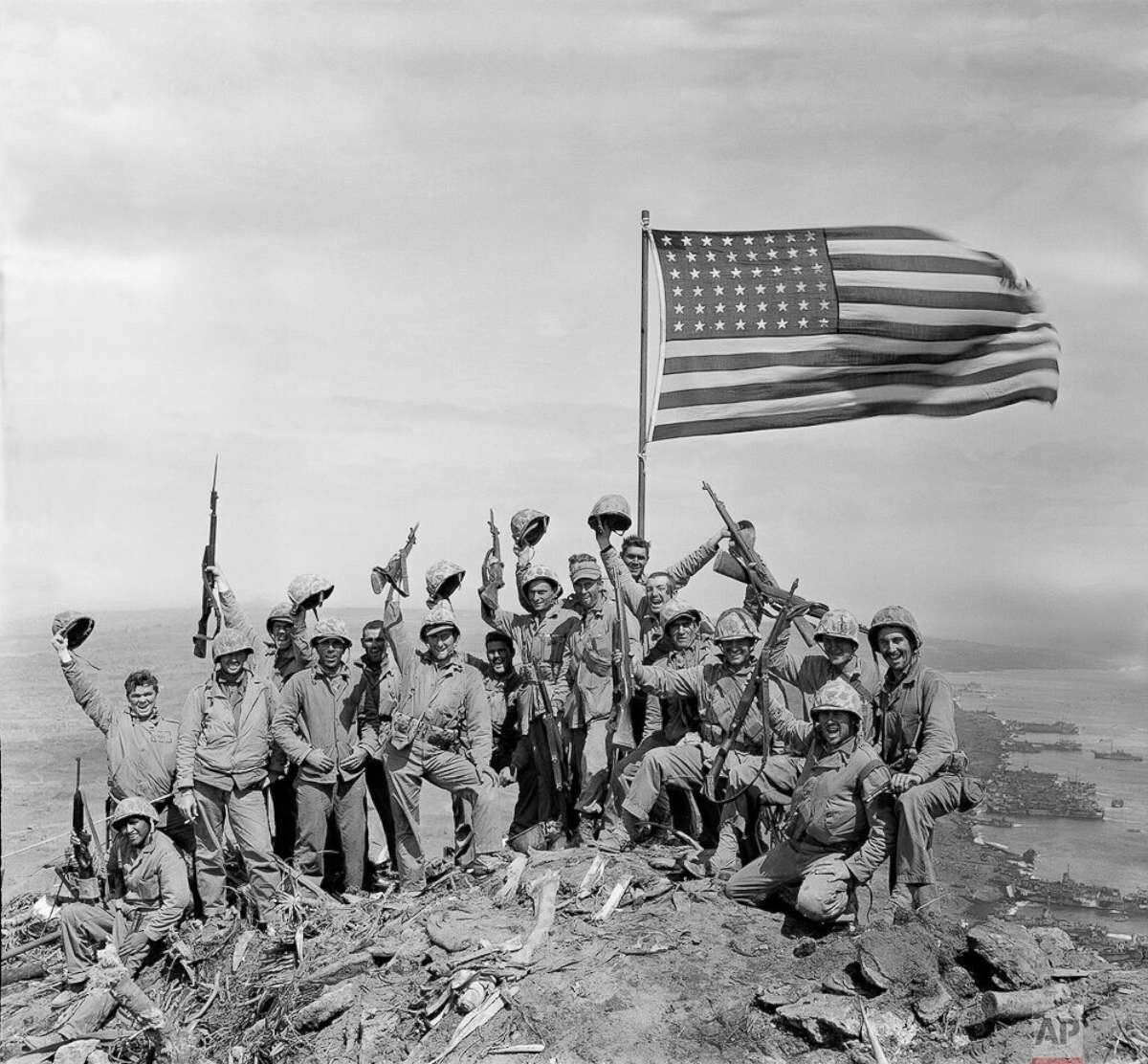
American Enlistment
People for the US forces were in high demand during WWII. At its peak, the US Amy had 8 million soldiers and the US Navy had 3.4 million soldiers. Men gave up on schooling, jobs, and family time to enlist and go to Europe, Asia, or the Pacific. Over 10 million men were inducted into the military while the Selective Training and Service Act.
(To the right is a photo American Marine soldiers during WWII on Mount Suribachi on Iwo Jima.)
Bickel's Enlistment
Born and raised in Philadelphia, Pennsylvania, Francis Bickel enlisted into the US Navy from PA on March 3, 1943. Almost 1.25 million Pennsylvanians served the country in the armed forces.
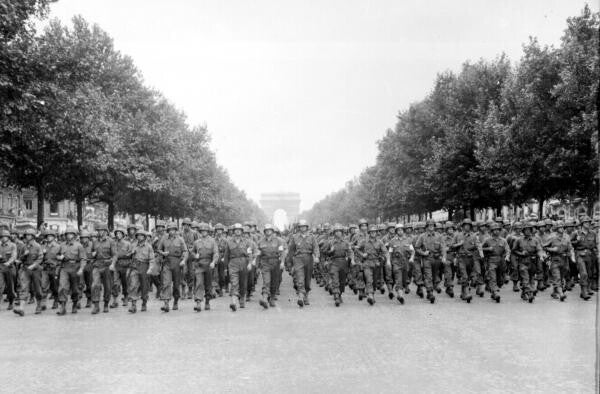
(To the left is a picture of the 28th Infantry Division, a Pennsylvania National Guard unit, marching in front of the Champs Elysee in Paris on August 29, 1944.)
Pennsylvania's Military Bases
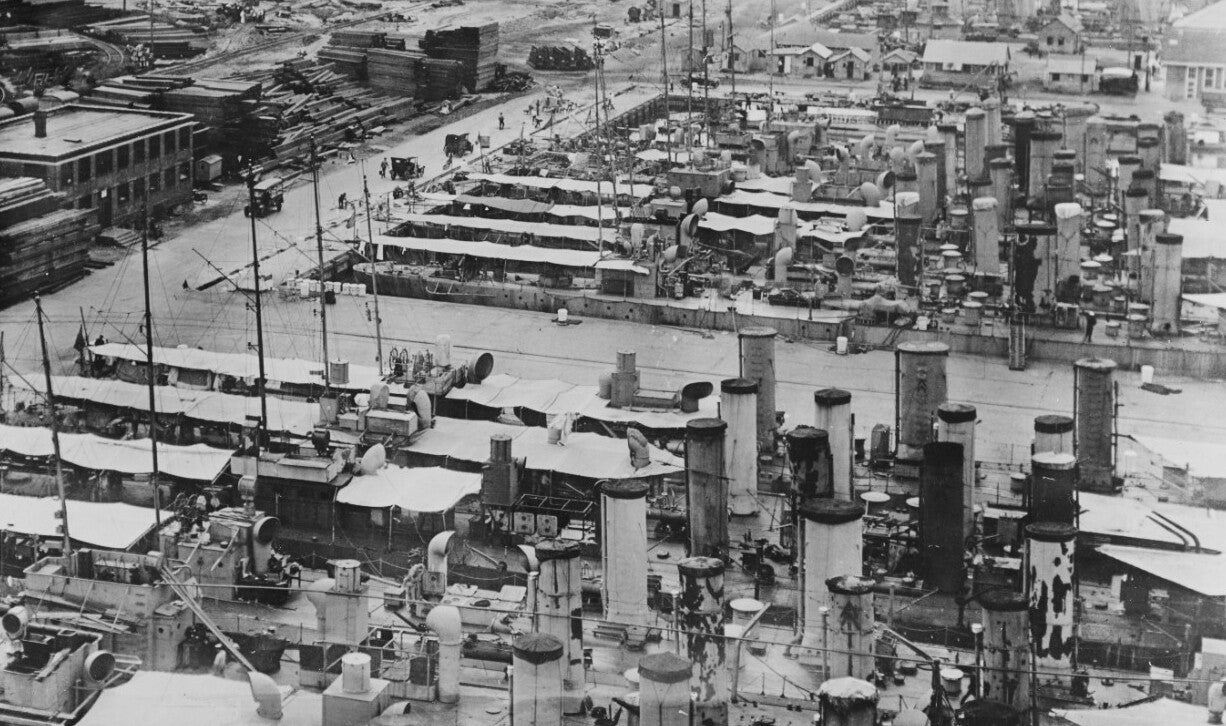
Pennsylvania was home to many military bases, among them being the Philadelphia Navy Yard, the New Cumberland Army Service Forces Depot. PA supported the war through giving supplies to both the US Army and Navy and contributed to the research and development of new weapons.
(To the right a photo taken of the Philadelphia Navy Yard.)
Pennsylvania's Economic Role
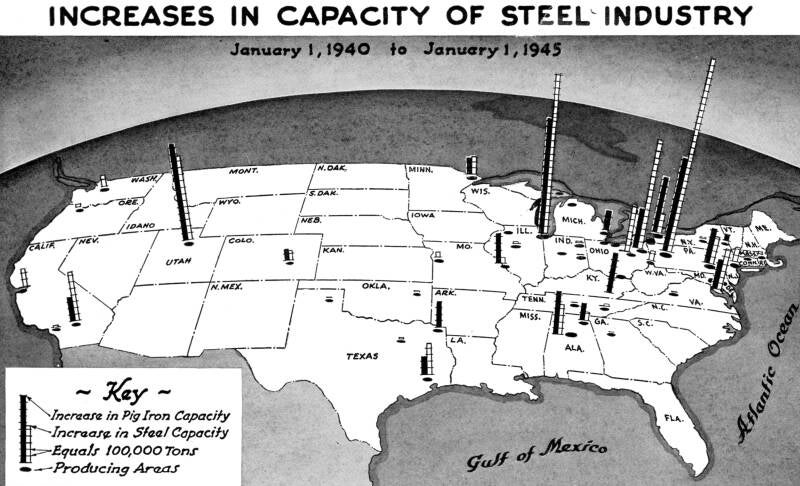
Pennsylvania was known as the "Arsenal of America" during WWII, producing 1/3 of the country's steel 1/5 of the world's. Pennsylvania's industry boomed creating tanks, battleships, radio crystals, parachutes, rations, and 100-octane aircraft fuel.
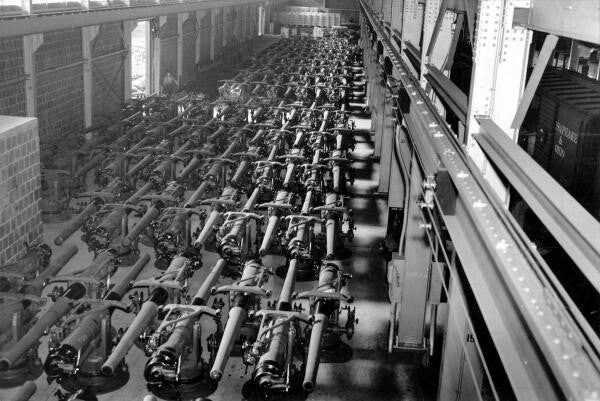
(The photo on the left is of some of the hundreds of guns stored at the Philadelphia Naval Shipyard awaiting distribution and installation aboard U.S. freighters on November 28, 1941.)
(The picture below shows different states' involvement in the steel production of WWII, with PA's being the clear highest.)
Pennsylvania's Agricultural Role
Farmers in Pennsylvania pitched in to aid the war by increasing agricultural production.
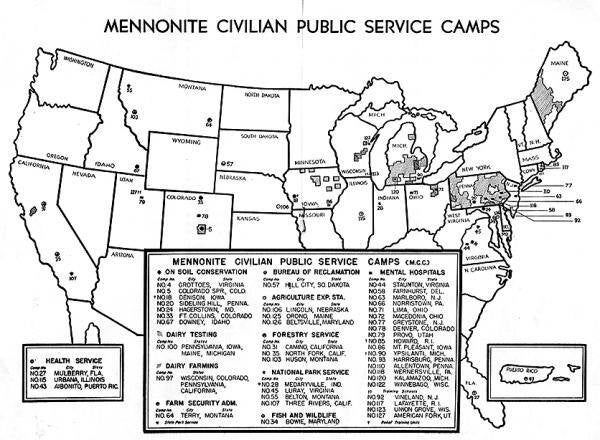
(Below is a picture of America's CPS camps. "During World War II, some 12,000 men served in 80 Civilian Public Service (CPS) camps across the nation. In 1944, close to 800 served in CPS camps in Pennsylvania. Pennsylvania led the nation in number of COs with more than 1,000. The largest group of Pennsylvania COs were Mennonites, many of them craftsmen-farmers, whose farming expertise was especially welcome in many states' soil conservation programs.")
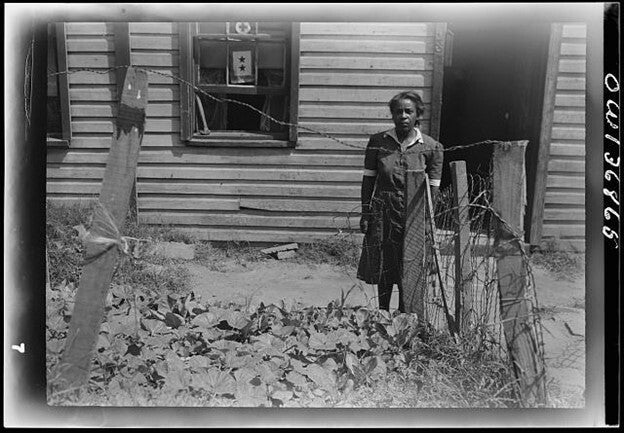
(To the right is a photo of an American woman and her victory garden in DC to help with the food rationing going on.)
Drawbacks
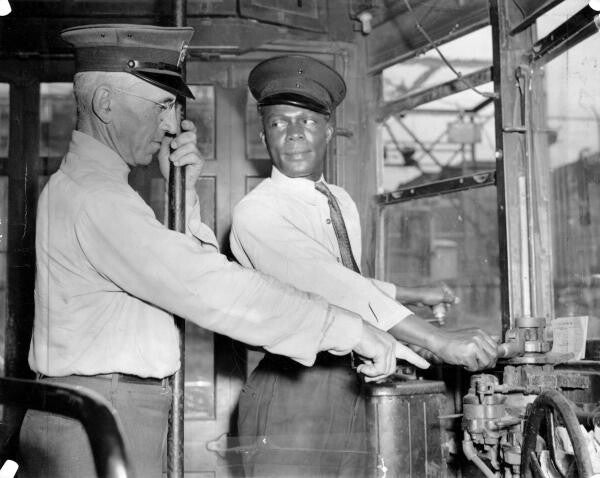
As southern Black Americans, immigrants, and rural farmers flooded into PA, housing shortages became common. Tensions rose, forming protests against the hiring of Black men until FDR sent the Army to combat the angry Whites. Rationing led to shortages and the black market flourished. 50,000 small businesses failed.
(To the left is an African American man by the name of James Stewart receiving instruction on how to operate a Philadelphia Transit Company trolley car on July 31, 1944.)